To be honest, things have been crazy busy lately. Everyone's talking about lightweight materials, right? Not just for cars, but for everything. Seems like everyone wants to shave off a few grams. I saw a new composite at a factory in Ningbo last month... smelled faintly of burnt sugar, strangely enough. They're claiming it's stronger than steel at half the weight. I'm still skeptical. It feels brittle.
Have you noticed how everyone jumps on the “easy to install” bandwagon? It’s always a trap. Design something "easy," and it usually means sacrificing durability or precision. I encountered that at a construction site in Shanghai last time - a pre-fab wall panel system. “Easy install,” they said. Took three guys six hours to get one panel straight. Later… forget it, I won't mention it.
We work mostly with galvanized steel and, increasingly, different grades of aluminum. The galvanized stuff… you can always tell a good batch by the smell. A sharp, metallic tang. The cheap stuff smells…dull, almost dusty. Aluminum’s a bit trickier. 6061 is the workhorse – easy to weld, machines well. But 7075, now that’s a different beast. Lightweight, super strong, but brittle as heck if you don't treat it right. And getting the anodizing right? Don't even get me started.
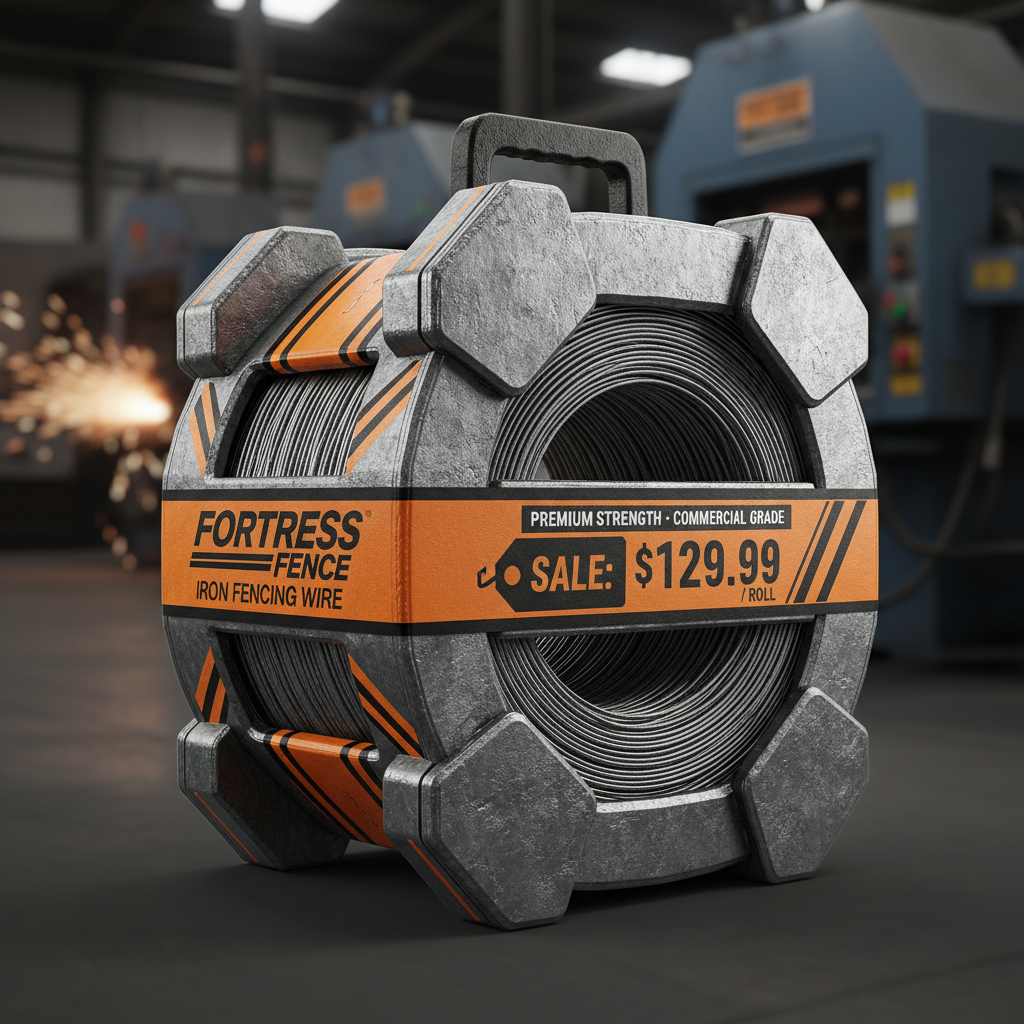
The Current Landscape of soft iron wire
The demand for high-quality soft iron wire is steadily increasing, driven primarily by the growth in infrastructure projects and the renewable energy sector. We’re seeing a lot more applications in cable armoring, especially with the push for underground power lines. The global market is heavily influenced by the price of steel, naturally, but also by increasingly stringent environmental regulations. A lot of suppliers are scrambling to meet the new standards.
It’s not just about volume, though. People are asking for more specific properties - higher tensile strength, better corrosion resistance, and tighter tolerances. They’re getting tired of having to rework things because the wire isn’t up to spec. Honestly, it keeps us busy, but I’d rather they just get it right the first time.
Design Pitfalls & Common Mistakes
One thing I’ve noticed is designers often underestimate the impact of bending radius. Get that wrong, and you’re looking at premature failure. It’s simple physics, but it's amazing how many people overlook it. Also, the interface between the wire and other materials – the connectors, the insulation – that’s often a weak point. We’ve had a few cases where the wire itself was perfectly fine, but the connection failed under stress.
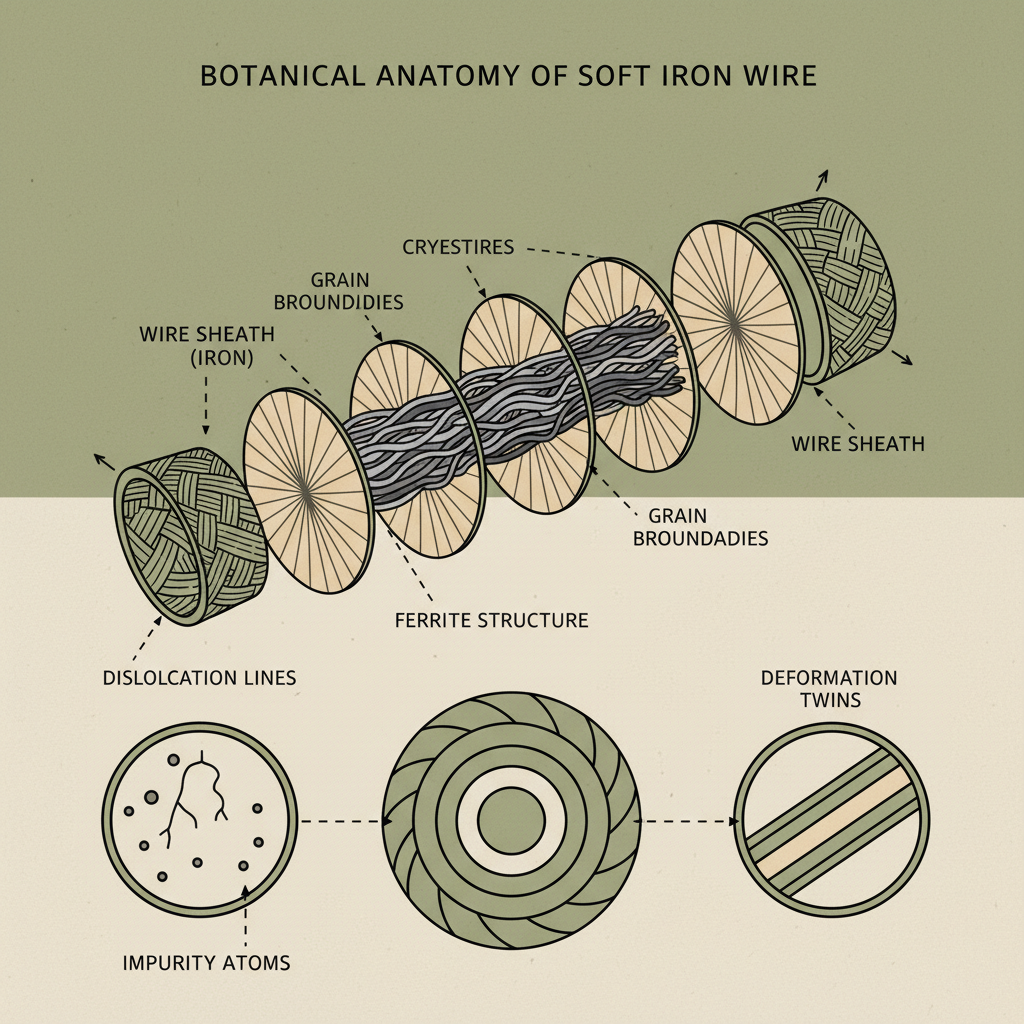
Another common mistake is assuming all soft iron wire is created equal. There are huge variations in purity, drawing process, and annealing treatment. Cheap wire is often full of impurities, which weakens it and makes it more susceptible to corrosion. It looks the same to the untrained eye, but it's a world of difference.
And then there's the whole issue of specifying the wrong gauge. Too thick, and you're wasting material and adding unnecessary weight. Too thin, and it won't hold up. It’s a balancing act.
Material Composition & Handling
The core of it all, of course, is the iron itself. We primarily deal with low-carbon steel – usually around 0.05% to 0.25% carbon. That gives it the necessary ductility for drawing into wire. The drawing process itself is critical. It has to be done slowly and carefully to avoid introducing stress fractures. You can feel the difference between a well-drawn wire and a rushed one – it’s smoother, more consistent.
Handling is important too. Keep it dry, obviously. Rust is the enemy. But also, avoid sharp bends and kinks. Those create stress points that can lead to failure. And don’t just toss it around! Seriously, I've seen guys treat this stuff like it’s string. It’s not.
The coating, if any, is also crucial. Galvanizing, as I said, is common. But we’re also seeing more demand for polymer coatings for increased corrosion resistance. The trick is getting the coating to adhere properly to the wire surface. It's not as easy as it sounds.
Real-World Testing Protocols
Forget those sterile lab tests. We need to know how this wire performs in the real world. We do a lot of bend tests – basically, wrapping the wire around a mandrel and seeing how much it can withstand before it cracks. We also do tensile tests, of course, but we focus on simulating actual installation conditions.
I personally like the salt spray test. Spray it with salt water, leave it for a few days, and see how much rust forms. It’s a quick and dirty way to assess corrosion resistance. But the best test is always time. Install it, leave it in the field, and check back in six months. That’s when you really find out what it’s made of.
Soft Iron Wire Performance Metrics
User Application & Unexpected Uses
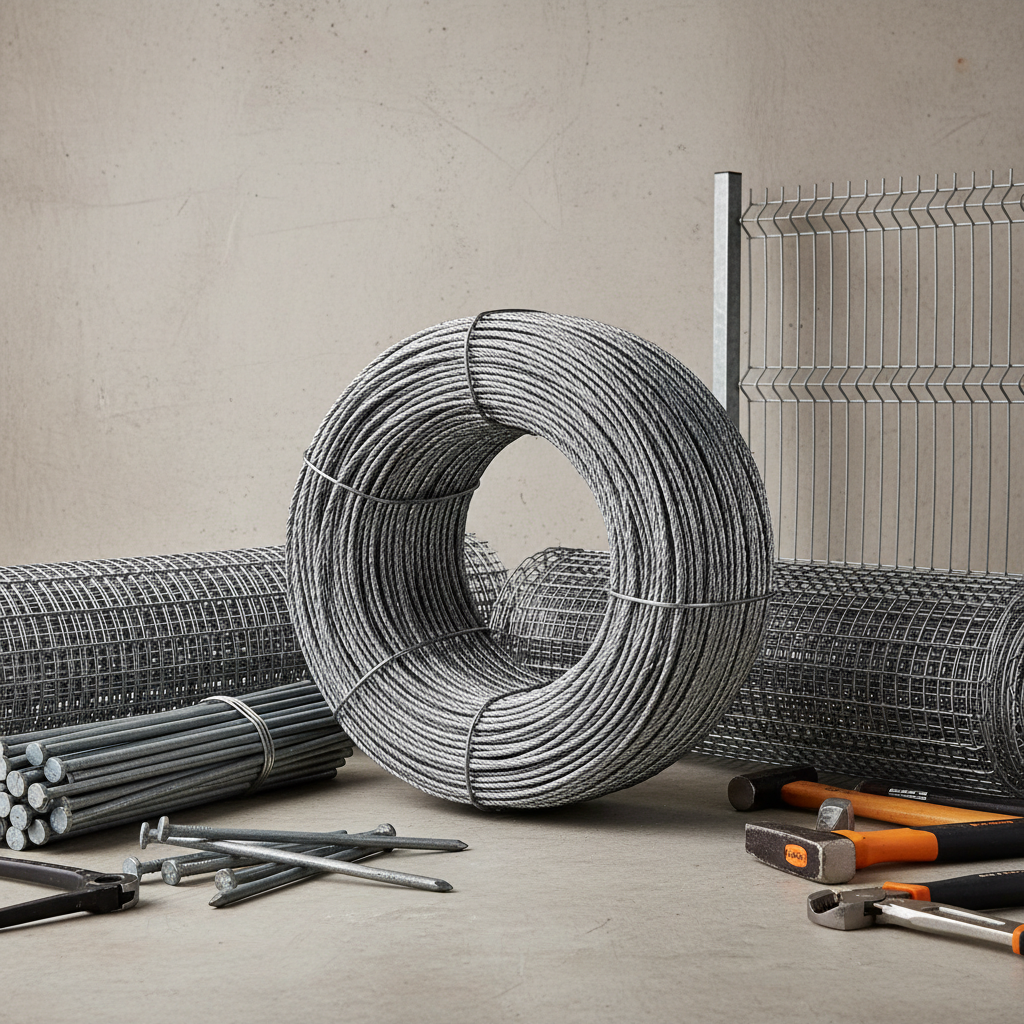
Mostly it’s cable armoring, as I said. But we’ve also seen it used in a lot of interesting applications – guy wires for antennas, suspension cables for small bridges, even reinforcing mesh for concrete. One guy used it to make a giant sculpture of a dragon! Seriously.
Interestingly, a lot of users aren't engineers. It's the guys on the ground, the installers, who come up with the cleverest uses. They’re the ones who know what works and what doesn't. I was talking to a guy last week who was using it to secure solar panels to a rooftop – a much simpler and cheaper solution than using specialized mounting hardware.
Advantages & Disadvantages - A Practical View
The biggest advantage is the cost, obviously. It’s significantly cheaper than stainless steel or other high-strength alloys. It’s also relatively easy to work with – it can be cut, bent, and welded with standard tools. And it’s readily available.
But it rusts. Let’s not pretend otherwise. You need to protect it with a coating or paint. And it's not the strongest material in the world. For high-stress applications, you’re better off with something else. It’s a compromise, but a worthwhile one in many cases. You get a good balance of strength, cost, and workability.
Anyway, I think a lot of people overestimate its lifespan if they don’t maintain it.
Customization Options & Case Studies
We can do a lot with customization. Different coatings, different gauges, different tensile strengths. Last month, that small boss in Shenzhen who makes smart home devices insisted on changing the interface to , and the result was a three-week delay and a whole lot of headaches. He wanted to use a thinner wire to fit inside the connector, but it wasn’t strong enough. Had to go back to the drawing board.
We also do custom winding and spooling. Some customers want the wire pre-wound onto a specific type of spool for automated installation. It seems like a small thing, but it can save them a lot of time and money.
We had one customer, a manufacturer of electric bicycles, who wanted a wire with a specific color-coded insulation to make it easier to identify different circuits. We were able to accommodate that, no problem.
Summary of Soft Iron Wire Customization Parameters
| Coating Type |
Wire Gauge (mm) |
Tensile Strength (MPa) |
Custom Spooling Options |
| Galvanized |
1.6 |
400 |
Standard Plastic Spools |
| Polymer |
2.0 |
500 |
Wooden Reels |
| Epoxy |
1.2 |
350 |
Custom Sizes Available |
| None |
2.5 |
600 |
Bulk Packaging |
| Zinc-Aluminum |
1.8 |
450 |
Cardboard Cores |
| PVC |
2.2 |
550 |
Palletized Shipments |
FAQS
That really depends on the environment. Coastal areas with salt spray will obviously corrode it faster. With a good galvanized coating, you're looking at maybe 10-15 years. Without any protection, maybe 2-3. But honestly, regular inspection and maintenance are key. A little bit of paint can go a long way.
The drawing process is huge. If it's not done right, you can introduce microfractures that weaken the wire. Annealing is also important – it relieves stress and makes it more ductile. And the quality of the steel itself, of course. Cheap steel means cheap wire.
Not really. It starts to lose its strength at around 200°C. You'd be better off with stainless steel or another high-temperature alloy. Trying to use soft iron wire in a hot environment is just asking for trouble.
Keep it dry, keep it covered, and keep it off the ground. Simple as that. A well-ventilated warehouse is ideal. Avoid storing it near chemicals or corrosive materials. And if you're storing it outdoors, make sure it's properly protected from the elements.
You can patch it, sure, but it’s generally not recommended. The repair is rarely as strong as the original wire. It's usually better to replace it entirely. Especially for critical applications. Don’t try to be a hero.
Galvanizing provides a sacrificial layer of zinc that protects the steel from corrosion. Polymer coatings create a barrier that prevents moisture from reaching the steel. Galvanizing is generally cheaper, but polymer coatings can offer better long-term protection in harsh environments.
Conclusion
So, there you have it. Soft iron wire isn’t glamorous, but it’s a workhorse. It's a cost-effective, versatile material that gets the job done in a lot of applications. It’s not always the perfect solution, but it’s often the right solution, especially when you consider the cost-benefit ratio. The key is understanding its limitations and using it appropriately.
Ultimately, whether this thing works or not, the worker will know the moment he tightens the screw. You can run all the tests you want in a lab, but the real test is out in the field, under real-world conditions. And that's where experience counts. That’s why I'm always on the construction sites – to see what’s actually happening.